STRATEGIC INTELLIGENCE
Are Your KPIs on Track?
Are Your KPIs on Track?
What About Your Strategy?
. Strategic Intelligence helps you see whether your company is truly moving in the right direction.
Operational Success Is Not the Same as Strategic Success
Companies today generate more data than ever before.
KPIs are measured.
Departmental targets are tracked.
Financial performance is reported.
Operations are managed through digital systems.
Yet amid all this data, one fundamental question often remains unanswered:
Is the company actually getting closer to its strategic goals?
A department may achieve its KPI.
A project may be completed on time.
An employee may exceed their target.
Financial results may look strong in the short term.
But the sum of these outcomes does not necessarily mean that the company is moving in the right direction.
Strategic Intelligence is a new management approach designed to bridge the gap between operational performance and corporate strategy.
Traditional enterprise systems typically answer questions such as:
What happened?
Was the target achieved?
Was the budget exceeded?
Did performance improve?
These are important questions.
But they are not enough for strategic management.
A company also needs to understand:
Why did this result occur?
Did this outcome move us closer to our strategic objective?
Did an improvement in one KPI create risk elsewhere?
What will be the second- and third-order effects of today’s decision?
Has the company started to drift away from its strategic direction?
How Does Strategic Intelligence Work?
The Strategic Intelligence approach connects corporate strategy, strategic objectives, departmental goals, KPIs, workforce data, operational outcomes, and financial performance.
The objective is not simply to monitor performance.
The role of artificial intelligence in companies is changing rapidly.
In the first phase, AI generated content.
Then it began analyzing data.
Now, Agentic AI systems are starting to take an active role in business processes.
The next phase is more critical:
AI systems must be able to understand strategic context.
An AI agent should not only analyze data.
It should understand the company’s objectives.
It should evaluate whether decisions are aligned with strategy.
It should detect potential deviations early.
And when necessary, it should be able to tell management:
In the coming years, companies will not compete only with other companies.
They will increasingly compete with organizations that make decisions faster, automate more processes, and use data in real time.
That is why a new **intelligence layer** will emerge above ERP, CRM, and HR systems.
This layer will bring data together, connect it with strategic objectives, detect deviations, and guide decision-makers.
We define this new layer as **Strategic Intelligence**.
Promet Perspective
Nearly 20 years of enterprise technology experience at Promet has taught us something important:
The real problem for companies is not a lack of data.
It is the lack of strategic connection between data points.
**Strategic Intelligence is more than a new software module.**
Companies today generate more data than ever before.
KPIs are measured.
Departmental targets are tracked.
Financial performance is reported.
Operations are managed through digital systems.
Yet amid all this data, one fundamental question often remains unanswered:
Is the company actually getting closer to its strategic goals?
A department may achieve its KPI.
A project may be completed on time.
An employee may exceed their target.
Financial results may look strong in the short term.
But the sum of these outcomes does not necessarily mean that the company is moving in the right direction.
Strategic Intelligence is a new management approach designed to bridge the gap between operational performance and corporate strategy.
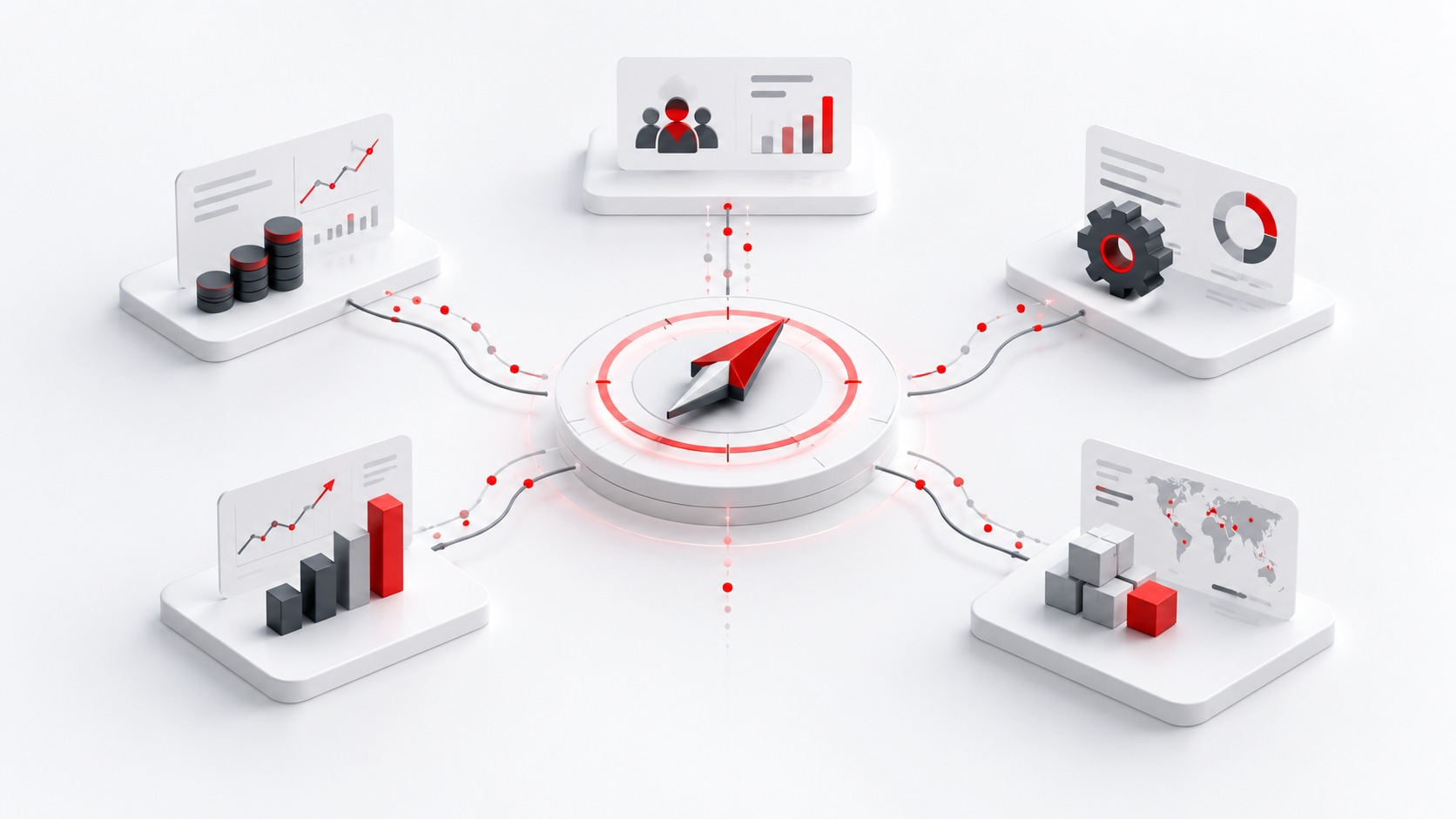
From KPIs to Strategic Direction
Connecting operational signals, performance indicators, and enterprise data to a single strategic direction.
Traditional enterprise systems typically answer questions such as:
What happened?
Was the target achieved?
Was the budget exceeded?
Did performance improve?
These are important questions.
But they are not enough for strategic management.
A company also needs to understand:
Why did this result occur?
Did this outcome move us closer to our strategic objective?
Did an improvement in one KPI create risk elsewhere?
What will be the second- and third-order effects of today’s decision?
Has the company started to drift away from its strategic direction?
How Does Strategic Intelligence Work?
The Strategic Intelligence approach connects corporate strategy, strategic objectives, departmental goals, KPIs, workforce data, operational outcomes, and financial performance.
The objective is not simply to monitor performance.
The objective is to **measure strategic alignment**.
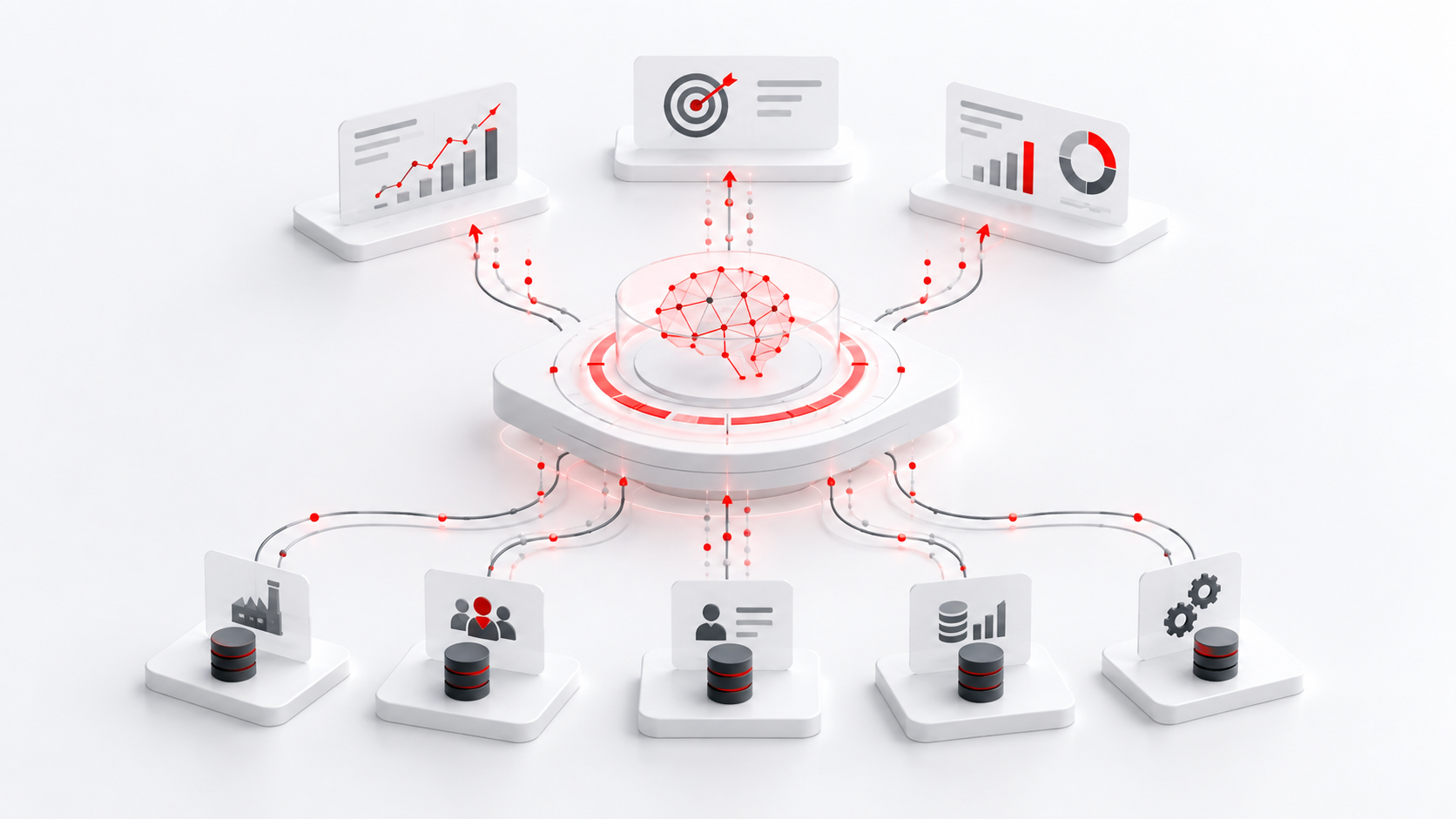
A New Decision Layer
Agentic AI can connect enterprise systems, interpret signals, and help management make better strategic decisions.
The role of artificial intelligence in companies is changing rapidly.
In the first phase, AI generated content.
Then it began analyzing data.
Now, Agentic AI systems are starting to take an active role in business processes.
The next phase is more critical:
AI systems must be able to understand strategic context.
An AI agent should not only analyze data.
It should understand the company’s objectives.
It should evaluate whether decisions are aligned with strategy.
It should detect potential deviations early.
And when necessary, it should be able to tell management:
“Operational results look strong. But the company is drifting away from its strategic direction.”
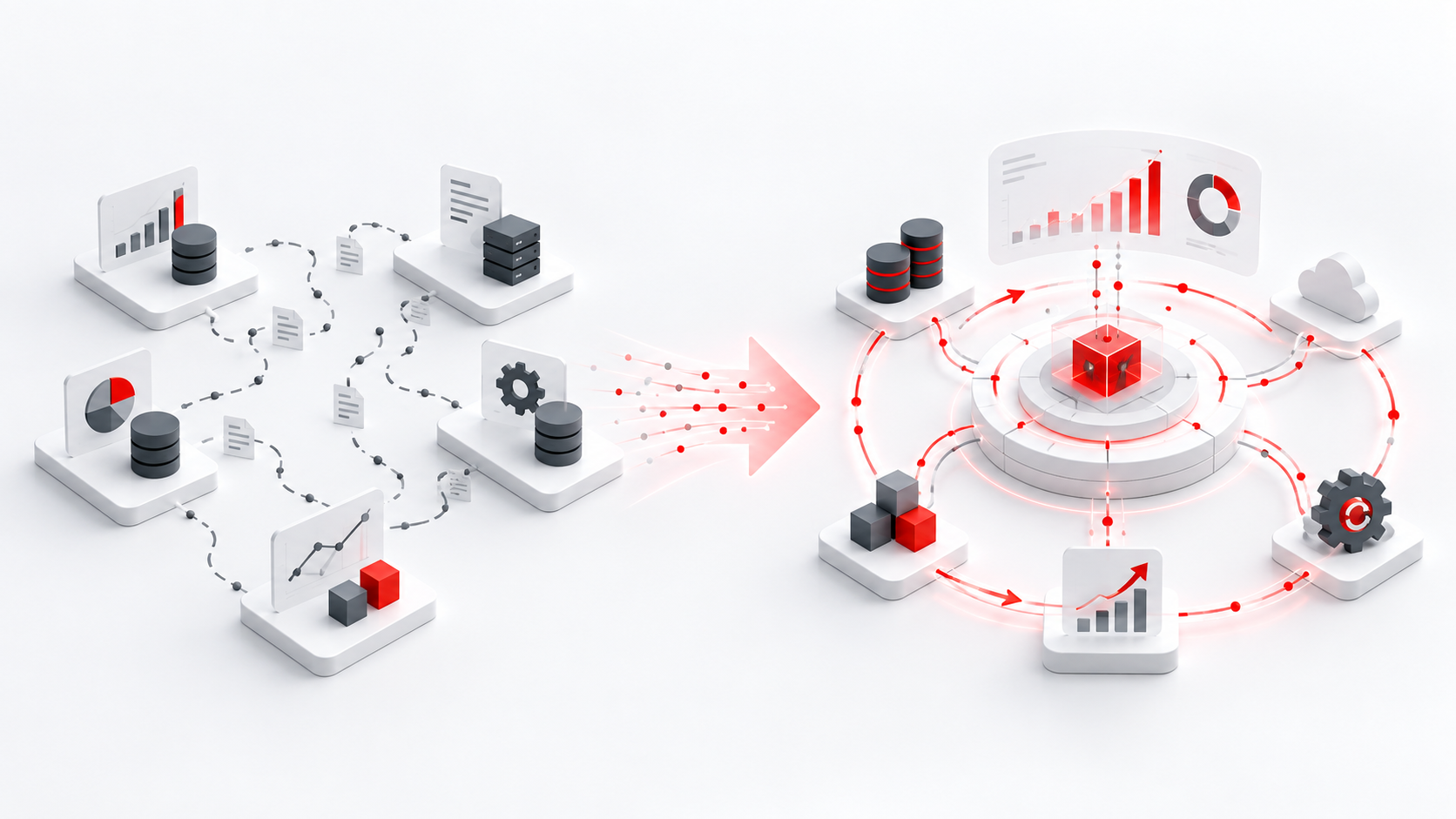
Toward the Autonomous Enterprise
The next competitive advantage may come from organizations that can sense, decide, and act faster.
In the coming years, companies will not compete only with other companies.
They will increasingly compete with organizations that make decisions faster, automate more processes, and use data in real time.
That is why a new **intelligence layer** will emerge above ERP, CRM, and HR systems.
This layer will bring data together, connect it with strategic objectives, detect deviations, and guide decision-makers.
We define this new layer as **Strategic Intelligence**.
Promet Perspective
Nearly 20 years of enterprise technology experience at Promet has taught us something important:
The real problem for companies is not a lack of data.
It is the lack of strategic connection between data points.
**Strategic Intelligence is more than a new software module.**